


Get The Facts
About CT's Public Charter Schools
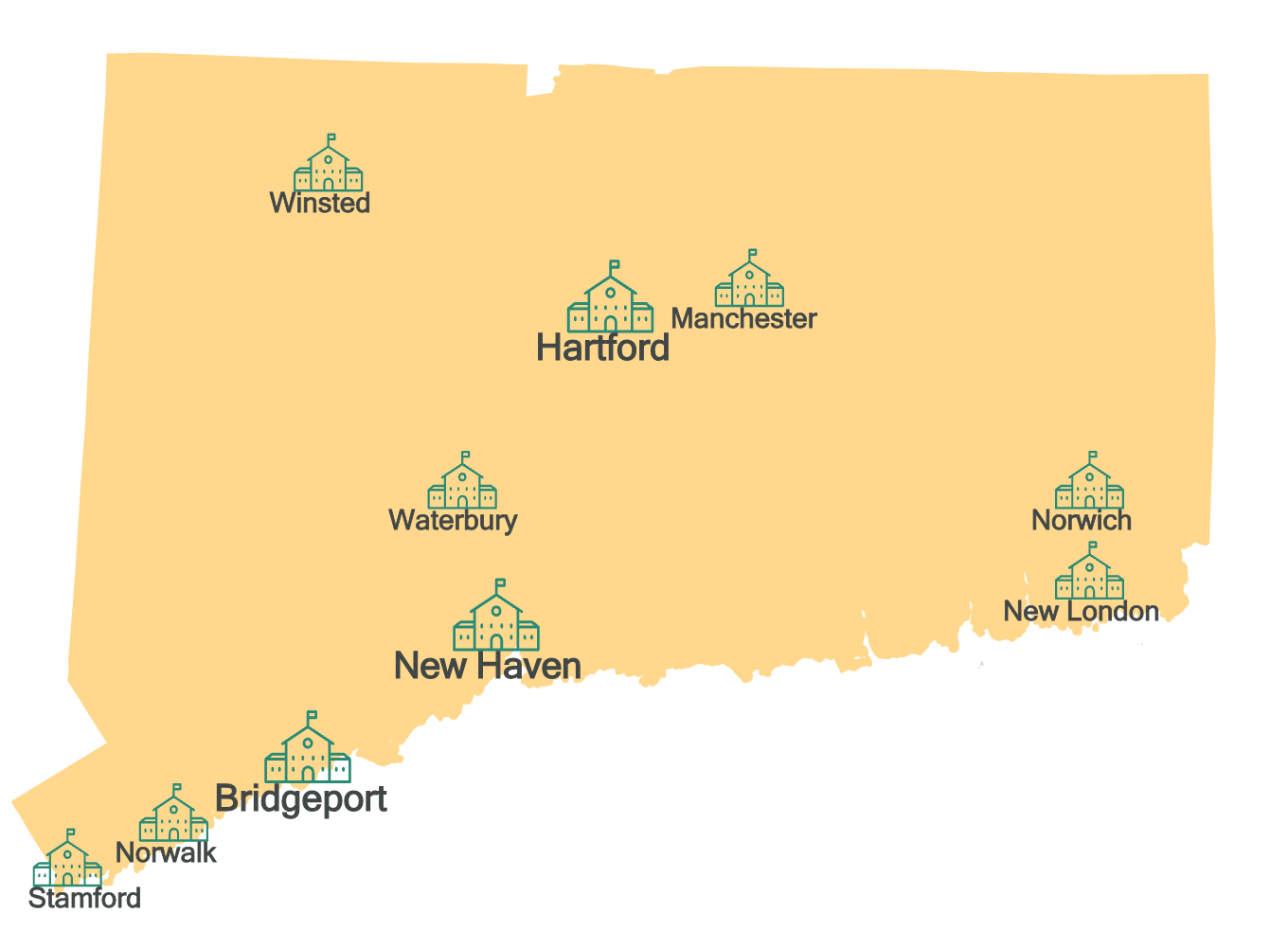
Connecticut’s public charter school sector spans 8 different communities and includes 23 unique public charter schools.
About Our Students
Connecticut’s public charter school students are the most diverse of any school type, far outpacing the statewide averages of students of color and those from economically disadvantaged families. Public charter schools have shown significant results in closing learning gaps across their student population, but especially among those historically disadvantaged groups.
58% student enrollment
ELL students
10% statewide enrollment
Charter Landscape by Region
Find A School Near You
Explore hundreds of unique and innovative public charter schools across New York State in our interactive map and find the one that’s changing lives in your community.

Get Your Questions Answered
Public charter schools are tuition-free, independently operated public schools that are granted the freedom to innovate in their curriculum, programming, culture, and professional development. In exchange for greater flexibility in their operations, public charter schools are subject to increased accountability standards. In Connecticut, charter schools are open equally to all students, regardless of background, ability, or income. They strictly follow non-discriminatory enrollment practices, often using a lottery system when demand exceeds available seats.
In Connecticut, public charter schools are almost entirely funded by the state, utilizing funds specifically set aside for these innovative public school options. State funding for charter schools is an entirely separate funding stream than what local school districts receive. However, unlike their public school counterparts, public charter schools do not receive facilities funding from the state. These expenses are often covered by the charter schools’ operating budget.
Because public charter schools can only open in Alliance Districts, state and local funding to the host district schools is protected from any reductions by law. Connecticut law prohibits the municipality from reducing its local contribution to district funding and the state cannot reduce funding for an alliance district and as such, the state ECS contribution to the district schools cannot go down when a state charter school opens.
No. Charter schools are public schools, therefore they cannot have any religious affiliation. Connecticut law dictates that charter schools must be secular in their curriculum, operations, governance, and admissions.
Public charter schools offer innovative approaches to addressing student needs and inspiring them on their educational journeys. Connecticut’s charter schools have shown significant results in closing achievement gaps among student groups, especially for historically disadvantaged student populations. Public charter schools were founded on the notion that not every public school works for every student. Public charter schools offer unique alternatives that could better fit a student’s unique needs.